
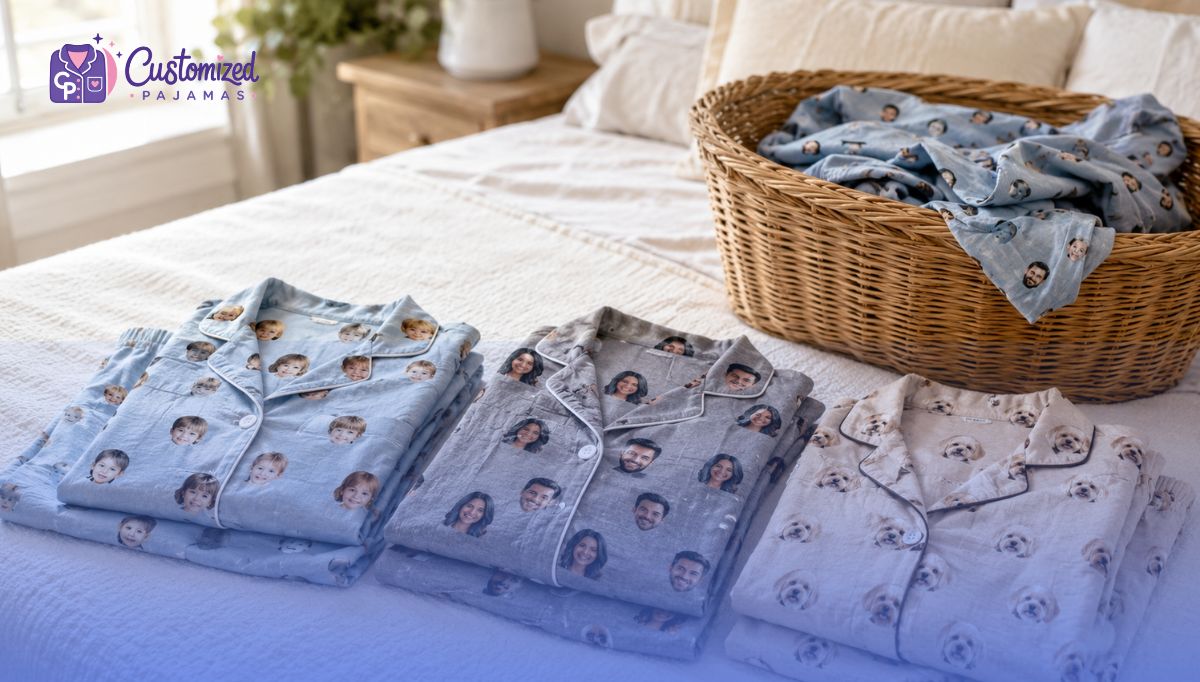
How often should you change your pajamas to maintain perfect sleep hygiene and protect your skin health? While most of us are incredibly diligent about washing our daily underwear or rotating our work clothes, sleepwear often occupies a strange laundry loophole. Because we only wear our pajamas in bed, it is easy to assume they stay clean much longer than our daytime apparel. However, leaving your favorite sleepwear set on rotation for weeks at a time can introduce a surprising number of hygiene issues. If you are ready to optimize your sleep health and extend the lifespan of your custom apparel, let’s explore exactly what the experts say about keeping your nighttime wardrobe fresh.
1. How Often to Change Pajamas
You should change your pajamas every 3 to 4 days under normal sleep conditions to ensure optimal hygiene, but it is not a one-size-fits-all rule. Several personal lifestyle variables dictate exactly how often should you change pajamas to maintain a clean environment.
- Your Lounging Habits: Are your pajamas strictly reserved for sleep, or do you put them on at 6:00 PM to cook dinner, watch TV, play with your pets, and lounge on the couch? If your sleepwear doubles as your evening loungewear, it picks up food particles, pet hair, dust from furniture, and environmental oils. If you spend significant daytime hours in your PJs, you should treat them like regular daytime clothes and change them every 1 to 2 days.
- Night Sweats and Thermoregulation: Everyone sweats during sleep as the body regulates its internal temperature, but some people experience heavy night sweats due to hormonal shifts, medications, or naturally hot sleep environments. Sweat is mostly water, but it carries salts, proteins, and lipids that build up quickly in fabric. If you regularly wake up feeling damp, your pajamas should be tossed into the hamper immediately after a single night’s use to prevent bacterial overgrowth.
- Your Showering Routine: When you choose to wash your body plays a huge role in fabric cleanliness. If you are a dedicated night showerer who climbs into bed completely clean, your pajamas will naturally remain fresher for a bit longer, allowing you to easily hit the 4-wear mark. However, if you apply thick body lotions, oils, or skin treatments after your nightly shower, those products immediately transfer to your clothes, trapping oils in the weave. In this scenario, or if you prefer to shower in the morning, your pajamas are absorbing a full day’s worth of sweat and environment, meaning you should change them every 2 days.
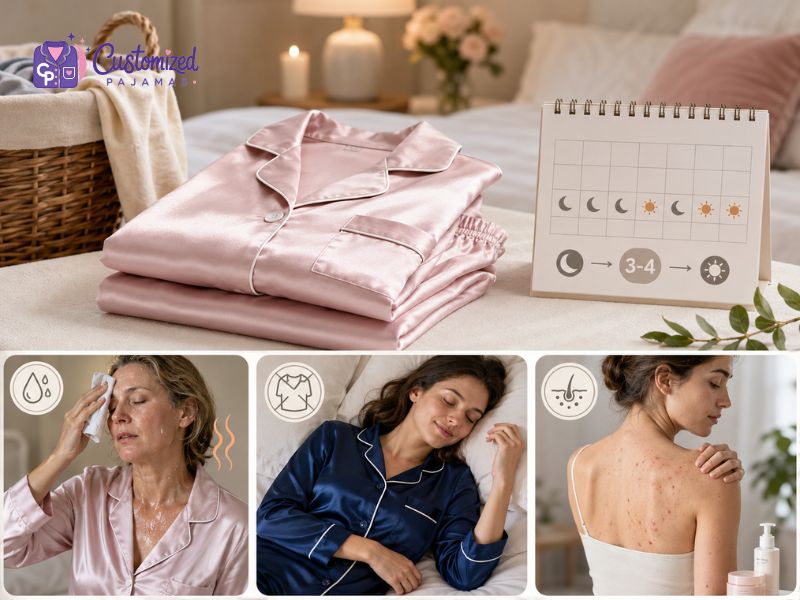
You should change your pajamas every 3 to 4 days under normal sleep conditions to ensure optimal hygiene
2. Why Sleepwear Collects Grime Faster Than You Think
Even if you go to bed feeling completely fresh, your body undergoes natural biological processes throughout the night that continuously transfer invisible debris directly into your clothing fibers.
2.1 Constant Dead Skin Shedding
The human body naturally sheds roughly 30,000 to 40,000 dead skin cells every single minute. When you spend seven to eight hours shifting around in bed, a massive portion of these microscopic cells rub off and embed directly into the weave of your pajama tops and bottoms.
2.2 Microscopic Dust Mites
Dead skin cells serve as the primary food source for microscopic dust mites. When you leave dead skin cells on unwashed fabric for multiple nights, you create an active breeding ground for these pests. For anyone dealing with seasonal allergies, asthma, or respiratory sensitivities, a heavy presence of dust mites in close contact with your face and chest can trigger nighttime congestion or disrupted sleep.
2.3 Sweat, Sebum, and Body Oils
Your body naturally produces sebum (oil) and secretes moisture to regulate its core temperature while you sleep. Over consecutive nights, this organic material builds up on the internal surface of the fabric. Even if your pajamas do not visibly look dirty or give off an obvious odor, this invisible accumulation can trap environmental dust, pet dander, and laundry residues against your pores.
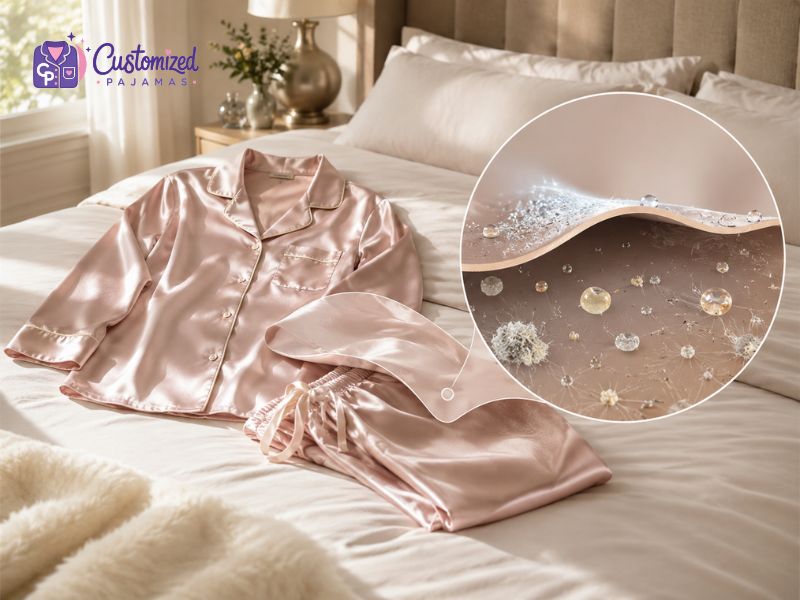
Over consecutive nights, sweat, sebum, and Body Oils builds up on the internal surface of the fabric
3. Fabric Performance and Bacteria Accumulation
Different textiles exhibit distinct structural and chemical properties that alter how quickly bacteria populate a garment. Understanding these variables allows you to adjust your washing schedule precisely according to the material of your sleepwear.
| Fabric Type | Moisture Management | Bacterial Retention Rate | Recommended Wash Frequency |
| Synthetic (Polyester/Nylon) | Hydrophobic (Traps sweat on skin) | High (Oils bind to synthetic fibers) | Every 1 to 2 days |
| Traditional Cotton | Absorbent (Retains moisture in fibers) | Moderate | Every 2 to 3 days |
| Bamboo Viscose | Wicking (Draws moisture away quickly) | Low | Every 3 to 4 days |
| Pure Linen | Highly Breathable (Rapid evaporation) | Lowest | Every 4 days |
4. Signs Your Pajamas Need an Immediate Wash
You must not rely strictly on a fixed calendar schedule to manage your sleepwear hygiene. Physical indicators serve as definitive cues that a garment has surpassed a safe microbial threshold.
You should inspect your garments for 3 distinct indicators that dictate an immediate wash:
- Microbial Odors: Any detectable stale or sour scent indicates that bacteria have already begun breaking down sweat and organic acids within the fibers.
- Loss of Fabric Texture: Fabric that feels stiff, heavy, or slightly tacky has become saturated with sweat residue, body lotions, and oils.
- Visible Discoloration: Yellowing around the collar, underarms, or back areas signals localized sweat saturation and high microscopic debris density.
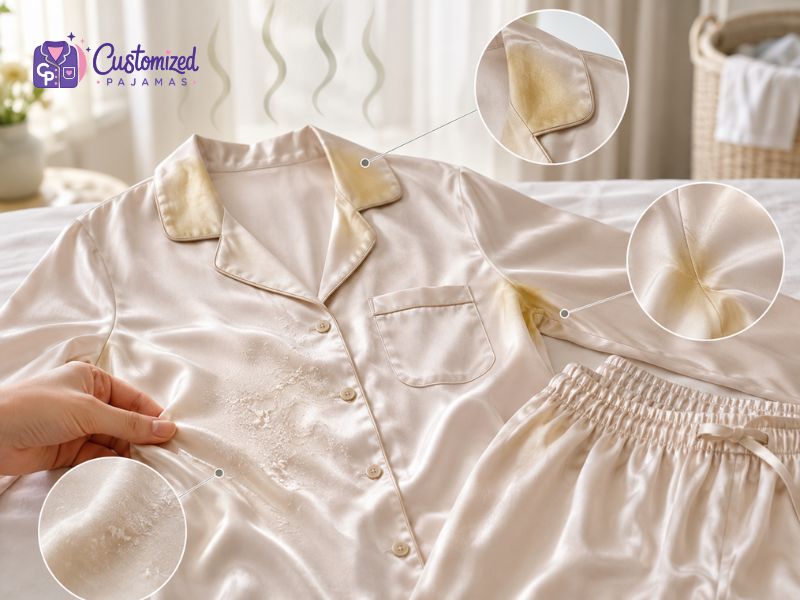
Signs Your Pajamas Need an Immediate Wash
5. The real health and skin risks of wearing pajamas for too long without changing them
Wearing unwashed sleepwear past its prime is not just a minor hygienic oversight, it can actively lead to frustrating skin irritations and systemic comfort issues.
5.1 Friction-Induced “Bacne” and Breakouts
When a single set of pajamas continuously re-accumulates dead skin cells and body oils, it presses those elements back into your skin pores for hours at a time. The physical friction of moving around while sleeping rubs this oily debris directly into your shoulders, chest, and back. For individuals prone to body acne, this friction-trapped buildup is a primary trigger for inflammatory breakouts and clogged pores.
5.2 General Skin Irritation and Micro-Abrasions
As sweat and natural body salts dry into fabric over multiple days, the texture of the textile fibers can stiffen. This subtle crusting effect causes microscopic friction against sensitive or dry skin, resulting in unexplained itching, red patches, or localized irritation when you wake up.
You should inspect your garments for 3 distinct indicators that dictate an immediate wash:
- Microbial Odors: Any detectable stale or sour scent indicates that bacteria have already begun breaking down sweat and organic acids within the fibers.
- Loss of Fabric Texture: Fabric that feels stiff, heavy, or slightly tacky has become saturated with sweat residue, body lotions, and oils.
- Visible Discoloration: Yellowing around the collar, underarms, or back areas signals localized sweat saturation and high microscopic debris density.
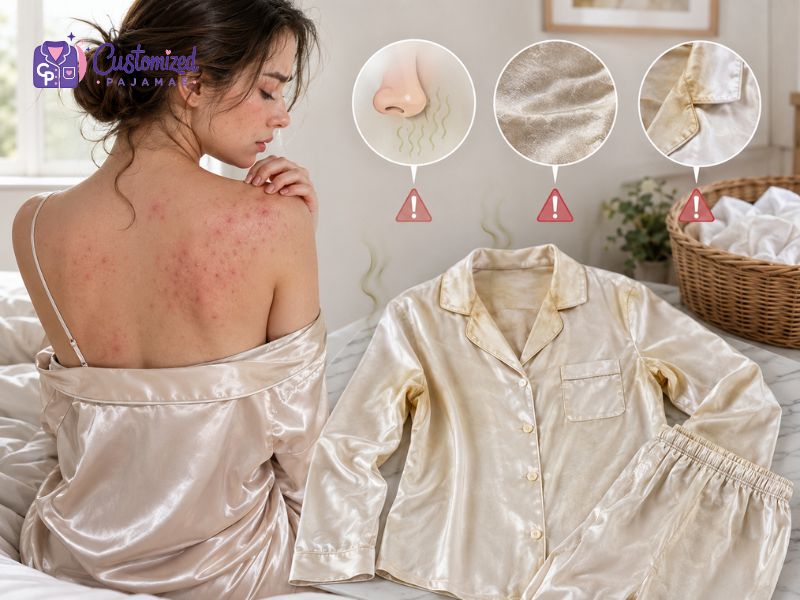
The real health and skin risks of wearing pajamas for too long without changing them
6. How to Extend Your Pajama Freshness
If you want to keep your evening clothing fresher for longer periods without constantly running small, inefficient cycles of laundry, consider integrating these strategic shifts into your bedtime ritual:
- Establish a “Bedtime Only” Rule: Change out of your pajamas immediately upon waking up. Set aside a separate, durable collection of sweatpants or loungewear for making breakfast, working from home, or relaxing on the couch.
- Hang Your Pajamas to Air Out: Instead of folding your worn pajamas and placing them back into a dark, unventilated drawer or throwing them in a pile on the floor, hang them up on an open hook. Allowing natural airflow to circulate through the fabric helps evaporate residual night moisture and slows down the development of stale odors.
- Optimize Your Sleep Environment: If you consistently wake up feeling warm, position a fan near the bed, crack a window, or lower your thermostat settings. Keeping your sleeping environment cool reduces active perspiration, preserving the structural integrity and cleanliness of your clothing.
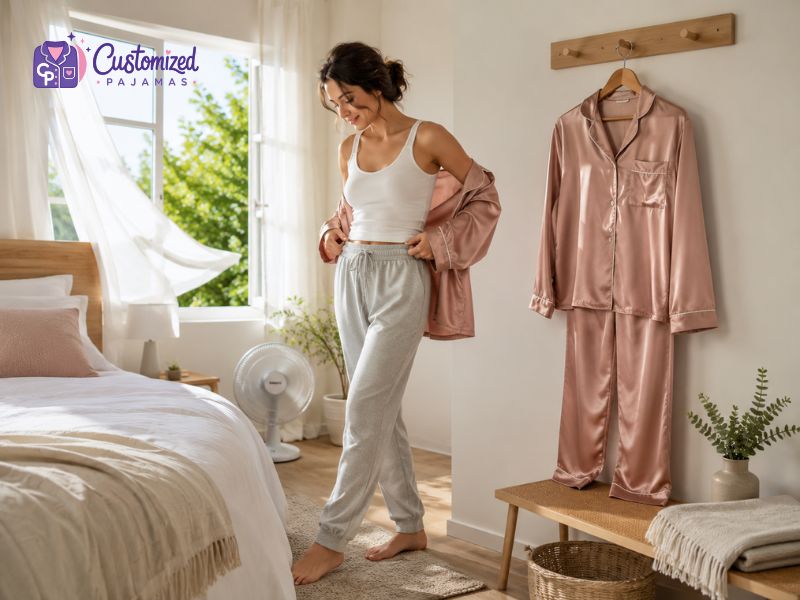
Change into your pajamas as soon as you wake up and hang them on hangers to remove odors
7. How to Properly Wash and Care for Your Custom Pajamas
If you own high-quality personal garments—such as custom face print pajamas, personalized couple pajamas, or custom pet face print sleepwear from Customized Pajamas—you want to ensure they stay perfectly clean without losing their vibrant, fun look. Proper after-sales care protects the integrity of the fabric while eliminating harmful bacteria.
To keep your custom designs pristine and hygienic, follow this step-by-step care routine:
- Turn the Garment Inside Out: Before placing your personalized sleepwear into the washing machine, flip the pieces inside out. This simple step shields the custom prints from directly rubbing against other clothing or the washing machine drum, preserving the print quality for years.
- Select the Optimal Temperature: Wash your custom pajamas in cold or warm water (ideally around 30°C to 40°C). Cold water is highly effective at lifting body oils when paired with a good detergent, and it prevents the fabric fibers from shrinking or fading.
- Choose a Gentle Cycle: Use a mild, color-safe detergent and set your machine to a gentle or permanent press cycle. Avoid using harsh chemical bleaches, which can break down textile fibers and damage custom colors.
- Air Dry When Possible: Tumble drying on high heat can bake sweat oils into fabric if they weren’t fully removed, and it can warp custom prints over time. For the best results, hang your custom pajamas to air dry in a well-ventilated space out of direct, harsh sunlight.
If you ever experience issues with fabric care, or if you need specific advice on managing the materials used in your custom styles, please contact the Customized Pajamas support team. We are always here to help you get the absolute most out of your meaningful, personalized apparel.
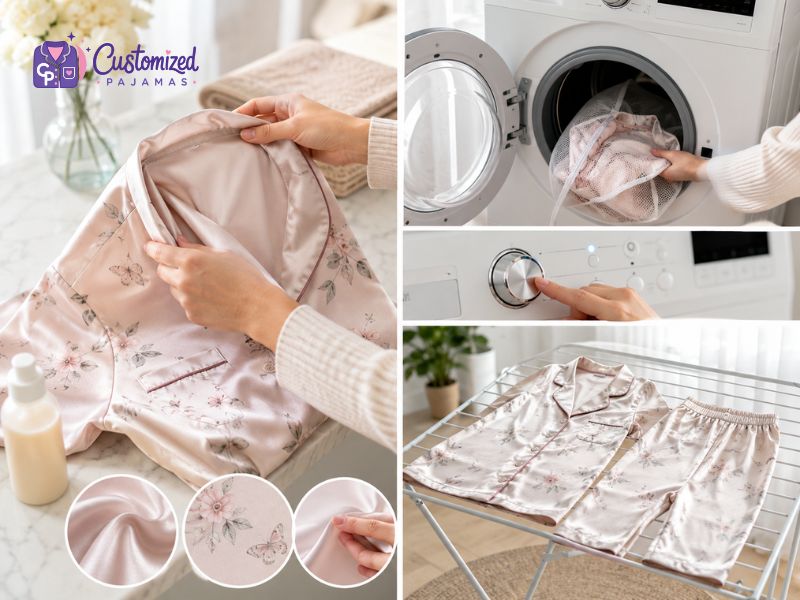
How to Properly Wash and Care for Your Custom Pajamas
8. Frequently Asked Questions
8.1 Does wearing underwear change how often should you change pajamas?
Yes, wearing undergarments alters the required frequency. You can safely wear your pajamas for up to 4 days if you wear clean underwear beneath them each night, because the undergarment intercepts the highest concentration of bodily fluids and skin microflora. You must shift to a strict daily wash cycle if you sleep without undergarments.
8.2 Is it okay to wear pajamas for a week?
Generally, no. By day seven, the accumulation of oils, skin cells, and bacteria can pose a risk to skin health and hygiene.
8.3 Do silk pajamas need to be washed as often as cotton?
Yes. While silk is naturally protein-based and somewhat resistant to dust mites, it absorbs body oils quickly, which can damage the delicate fibers if left unwashed.
8.4 Should children change their pajamas more frequently?
Yes. Children are often more active and prone to spills or nighttime accidents, so a daily change is usually recommended to maintain their sensitive skin barrier.
Determining how often should you change your pajamas is an essential component of personal health, skin protection, and sleep quality. To maintain an optimal hygienic standard, you must change your sleepwear every 3 to 4 days, adjust for specific fabric performances, and transition to daily cleanings if you face issues like night sweats or body acne. Adhering to structured laundry practices and managing your bedtime environment effectively controls bacterial growth and secures a cleaner night of rest.
To keep your personal hygiene routine running smoothly without adding extra laundry stress during the week, we recommend owning two to three sets of quality, custom-designed pajamas from Customized Pajamas. Having multiple sets ensures that while one is being laundered, you always have a fresh, clean, and beautifully personalized set waiting for you each night. Prioritize your skin health, invest in comfort, and enjoy the wonderful feeling of slipping into clean pajamas every night.